.svg)
.svg)

.svg)
.svg)


.svg)


.svg)
.svg)
.svg)


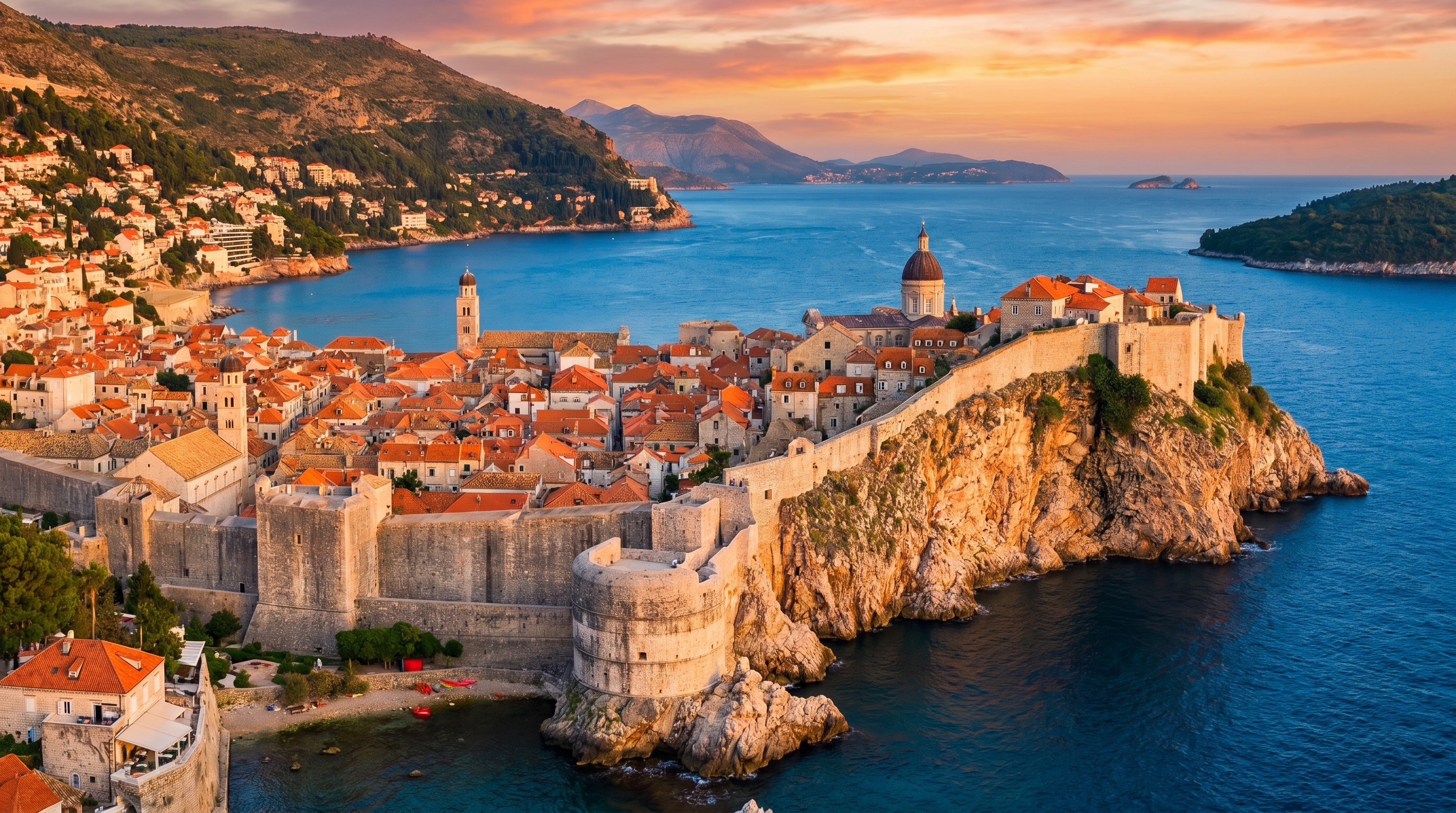

Do Indians Need a Visa for Croatia? (2026 Quick Answer)
Yes. Indian passport holders need a Schengen short-stay visa (Type C) to enter Croatia. There is no visa on arrival and no e-visa option for Indian citizens — the application must be completed in person at a VFS Global visa application centre in India before travel, with biometric data collected at the time of submission.
Croatia became a full Schengen Area member on 1 January 2023. Since then, the country follows standard Schengen visa procedures, which means the same Type C visa that covers France, Germany, or Italy also covers Croatia — and a Croatia Schengen visa grants access to all 29 Schengen member states during its validity period.
Applications from India are processed by the Embassy of Croatia (for applicants in Delhi and the surrounding jurisdiction) and the Consulate General of Croatia (for applicants in Mumbai and other regions). VFS Global manages appointment scheduling and document collection at centres across India in New Delhi, Mumbai, Bengaluru, Chennai, Kolkata, and Hyderabad.
Croatia Visa Types for Indians
The Schengen Type C short-stay visa covers most purposes Indian travellers have when visiting Croatia. The three most common categories are as follows.
Tourist Visa
The tourist category covers leisure trips, sightseeing, and holidays to destinations such as Dubrovnik, Split, Plitvice Lakes, and Hvar. It permits a stay of up to 90 days within any 180-day period. This is the most frequently applied-for category by Indian nationals and the default visa type offered through Visarun.ai's Croatia application flow.
Business Visa
The business category applies to applicants attending conferences, trade fairs, meetings with partners, or negotiations. It does not permit paid employment on Croatian soil. Applicants typically need an invitation letter from the Croatian business host, along with standard financial and employment proof from India.
Visiting Family or Friends
If the primary purpose of the trip is to visit a family member or friend residing in Croatia, applicants submit a sponsor invitation letter alongside the standard document set. The Croatian resident hosting the visit may also be asked to provide proof of accommodation and their own residence status in Croatia.
Airport Transit Visa (Type A)
Croatian embassies and consulates issue Schengen visas of both Type A and Type C. A Type A airport transit visa is an authorisation for transit through the international transit areas of airports of the Schengen member states. In practice, most Indian travellers transiting through European airports do not transit through Croatia specifically, but this category exists where a layover occurs at Zagreb Airport and the traveller does not clear Schengen immigration.
Croatia Visa Cost and Fees for Indians (2026)
The Schengen visa fee for Croatia is EUR 90 for adults. Children aged 6 to 11 pay EUR 45, and children under 6 are free. At the prevailing exchange rate of approximately INR 91–93 per euro, the adult consular fee works out to around INR 8,100–8,400, though the exact INR amount varies on the day of the appointment.
Fee categories by applicant age are listed below.
- Adults (12 years and above) — EUR 90 (approximately INR 8,100–8,400)
- Children aged 6 to 11 — EUR 45 (approximately INR 4,050–4,200)
- Children under 6 — no visa fee
In addition to the consular fee, VFS Global charges a service fee for processing the application at their centres in India. Based on the official VFS information for Croatia applications from India, this service charge is approximately INR 3,060. Optional add-on services such as two-way courier return and courier assurance carry additional charges that are listed on the VFS website at the time of booking.
All visa fees are non-refundable once the application has been accepted at the centre, regardless of whether the visa is approved, refused, or withdrawn. Fees are due on the visa application when applying, and the visa fee is subject to change without notice. Applicants are strongly advised to confirm the current fee schedule on the official VFS Global India website before attending their appointment.
Through Visarun.ai's end-to-end Croatia application service, the total platform cost is USD 166 per applicant — this covers the government fee component of USD 104 and a Visarun service fee of USD 62. The Visarun service fee includes document review, application form preparation, and pre-submission checks to reduce avoidable errors.
Required Documents Checklist
The Croatian Embassy follows the Schengen Visa Code document framework. Every applicant is expected to submit the items listed below. Missing even one document is a common reason for applications being returned without processing.
Passport and Identity
- Valid Indian passport — must have at least 3 months validity beyond your stay and 2 blank pages , and must have been issued within the last 10 years
- All previous passports, if any, to show travel history
- Two recent colour passport-size photographs — 35mm x 45mm, white background, taken within the last six months
Application Form and Cover Letter
- Completed and signed Schengen visa application form — available through the VFS Global portal
- Cover letter — explaining the purpose of the trip, the planned itinerary day by day, and your intention to return to India at the end of the visit
Travel Documents
- Confirmed round-trip flight itinerary — a reservation showing outbound and return flights is acceptable; you are not required to purchase non-refundable tickets before visa approval
- Hotel bookings or confirmed accommodation for the entire duration of the stay; cancellation of accommodation after issuance of the visa for the Republic of Croatia may lead to revocation of the visa
Travel Insurance
- Travel insurance covering EUR 30,000 minimum , valid for the entire Schengen area and the full duration of the stay including entry and exit dates
Financial Proof
- Personal bank statements from the last 3 to 6 months — showing consistent salary credits or business income, not a single large deposit made just before applying
- Income Tax Returns (ITR) for the last 2 years, or Form 16 if ITR is not filed
- If self-employed — business registration documents, GST certificate, and CA-certified financials
Employment or Study Proof
- Salaried applicants — employer NOC or leave sanctioning letter on company letterhead, stating designation, salary, and confirmed leave dates
- Self-employed applicants — business registration certificate and a self-declaration of business activities
- Students — enrolment letter from the institution and NOC from the institution
- Retired applicants — pension statements and proof of retirement
For Business and Visiting Family Categories
- Business category — invitation letter from the Croatian host company, signed and on company letterhead, with contact details
- Visiting family or friends — original signed invitation letter from the host in Croatia, plus a copy of the host's residence proof in Croatia
The Croatian Embassy may request additional supporting documents during processing. Providing a well-organised file from the outset reduces delays and the likelihood of a request for further information.
How to Apply for a Croatia Visa from India (Step-by-Step)
The application process for a Croatia Schengen visa follows a set sequence. Each step needs to be completed in order, and skipping any stage — particularly biometric submission — will halt the application.
Step 1: Gather Your Documents
Before booking an appointment, compile all the required documents as listed in the checklist above. Check passport validity, confirm your bank statement covers the most recent three to six months, and obtain your travel insurance. Having documents ready before appointment booking prevents last-minute scrambles that cause errors.
Step 2: Book a VFS Appointment
Log in to the official website of VFS Global and book your appointment at the designated agency handling Croatia visa applications in India. Select the nearest application centre from the available cities: New Delhi, Mumbai, Bengaluru, Chennai, Kolkata, or Hyderabad. Appointment slots at VFS centres fill quickly during March to August. For summer travel, booking the appointment two to three months in advance is advisable.
Step 3: Complete the Visa Application Form
The Schengen application form is available for download on the VFS Global and Croatian Embassy websites. Fill it in accurately — any mismatch between form entries and supporting documents (such as travel dates that differ from your flight booking) raises flags during review. Sign the form before submission.
Step 4: Attend Your VFS Appointment
Arrive at the VFS centre at your scheduled time with all original documents and photocopies as required. The centre staff will verify the documents and collect your biometric data — fingerprints and a digital facial photograph. The appointment typically takes 15 to 20 minutes and includes document verification, biometric data collection, and application submission. Applicants who have provided Schengen biometrics within the past 59 months at any VFS or Schengen embassy centre may be exempt from biometric re-collection, though this should be confirmed with VFS before attending.
Step 5: Pay the Fees
The consular fee (EUR 90 for adults, or equivalent in INR at the day's exchange rate) and the VFS service charge are payable at the centre. Fees are payable at the VFS center by cash, debit card, or credit card. UPI payments are accepted at select VFS centers. Check the specific centre's accepted payment methods when booking.
Step 6: Track Your Application
After submission, use the VFS Global online tracking tool with the reference number provided at the centre to follow your application status. The consular processing stage begins after VFS forwards the physical file to the Embassy of Croatia.
Step 7: Collect Your Passport
Once a decision has been made, your passport is returned to the VFS centre or dispatched by courier if you opted for the courier return service. Review the visa sticker carefully — check the validity dates, number of entries, and duration of stay to ensure they match what you applied for.
Croatia Visa Processing Time
The standard Croatia visa processing time is about 15 calendar days from the date of submission at the embassy, consulate, or authorised visa application centre. This timeline begins once the VFS centre forwards the physical file — not from the date of the VFS appointment itself.
Processing can extend up to 30 days if additional checks are required, and up to 60 days in exceptional cases where further document verification is needed. The VFS Global information page for Croatia in India also notes that the minimum processing period has been formally extended from a 30-day to a 60-day window under certain conditions, meaning applicants should not assume the 15-day standard applies in all cases.
During the peak summer travel season — particularly June through August when Croatia is at its most popular — demand for appointment slots rises sharply and processing capacity is stretched. It is recommended to apply for a Croatian Schengen visa at least 3 months prior to the start of your trip. Applications can be submitted up to six months before the planned travel date, but not earlier than that.
Visarun.ai's Croatia processing estimate is 10 to 15 business days for well-prepared applications. Applications with complete documentation and consistent supporting evidence typically stay within the standard timeline.
Visa Validity and Length of Stay
A Schengen Type C short-stay visa for Croatia permits a stay of up to 90 days within any 180-day period. This rule applies across the entire Schengen Area collectively, not just Croatia. If you enter France for 30 days and then visit Croatia, those 30 days count against your 90-day allowance.
The visa may be issued as single-entry, double-entry, or multiple-entry, at the Embassy's discretion based on the stated travel purpose and travel history. First-time Schengen applicants are typically issued a single-entry visa or a validity aligned closely with the trip dates. Repeat applicants with a clean Schengen history may receive a longer-validity multiple-entry visa.
Since Croatia joined the Schengen Area on January 1, 2023, the visa process has become more standardized, offering Indian travelers the added benefit of exploring 27 European countries on a single visa. If you already hold a valid multi-entry Schengen visa issued by any other Schengen country (such as France, Germany, or Italy), you may use that visa to enter Croatia without needing a separate Croatia-specific application, provided the visa is still valid and you have remaining days within the 90/180-day limit.
Common Rejection Reasons and How to Avoid Them
Schengen visa refusals for Indian applicants most often trace back to a small set of avoidable issues. Understanding what consular officers look for — and where files typically fall short — improves the quality of an application.
Insufficient Financial Proof
Croatian consular guidelines suggest applicants demonstrate financial capacity of at least EUR 50 per day of stay. Reviewers look at bank statements for consistent income patterns over three to six months — a large deposit made shortly before applying draws more scrutiny than a steady monthly salary. A recommended bank balance is approximately INR 3,00,000 per applicant. Avoid one-off transfers that inflate the balance artificially.
Weak Ties to India
Croatian visa officials want to be confident the applicant will return to India after the trip. Demonstrating strong ties to the home country through an employment contract stating the role and leave dates, property documents, proof of family responsibilities, or evidence of social and economic ties in India addresses this concern directly. A cover letter that explains your personal and professional situation in India adds context that documents alone cannot provide.
Inconsistent or Missing Itinerary
A vague travel plan — "visiting Croatia for tourism" without day-wise detail — raises questions about the genuine nature of the trip. A clear, day-by-day itinerary matching the hotel bookings and flight dates, and consistent with the cover letter, demonstrates a planned and purposeful visit. Cross-checking every date across documents before submission catches mismatches early.
Inadequate Travel Insurance
Insurance policies that do not clearly show EUR 30,000 minimum medical coverage, do not cover the full Schengen Area, or have a validity period that does not match the requested travel dates are a routine cause of refusal. Review the policy schedule carefully before including it in the file.
Incomplete or Unsigned Documents
Applications submitted with an unsigned form, photos that do not meet the specification, outdated bank statements, or photocopies without originals are returned or refused at the administrative stage. The VFS staff carry out a basic pre-check, but the final document review sits with the Embassy. A thorough self-check before the appointment avoids these errors.
Poor Schengen History
A history of prior overstays in any Schengen country, or previous visa refusals that were not satisfactorily explained in the cover letter, reduces the likelihood of approval. If a prior refusal exists, address it directly in the cover letter — explain the circumstances and what has changed in your profile since then.
Recent Changes (2025-2026 Updates)
Schengen Fee Revision to EUR 90
The EU raised the standard short-stay Schengen visa fee from EUR 80 to EUR 90 in mid-2024, and that rate continues into 2026. This EUR 90 rate applies to all Schengen countries including Croatia. The child fee for ages 6 to 11 is EUR 45, and children under 6 continue to be exempt from the consular fee.
Entry/Exit System (EES) — Now Operational
The EES is an automated IT system for registering non-EU nationals travelling for a short stay, each time they cross the external borders of the 29 European countries using the system. The system registers the person's name, travel document data, biometric data (fingerprints and captured facial images), and the date and place of entry and exit.
The Entry/Exit System began its progressive rollout on 12 October 2025 and became fully operational on 10 April 2026. It replaces traditional passport stamping, making overstay enforcement more automated than under the stamp-based system. For Indian visa holders, EES does not change the visa application process. However, border crossings may take slightly longer during the transition period as kiosks and booths ramp up at various crossing points.
ETIAS — Expected Later in 2026
The European Travel Information and Authorisation System (ETIAS) is set to launch several months after EES is fully operational, most likely in late 2026. ETIAS is an online pre-clearance requirement aimed at travellers from visa-exempt countries. Because Indian citizens already require a Schengen visa, ETIAS will not apply to them. Indian travellers visiting Croatia will continue to apply through the standard Schengen visa process regardless of when ETIAS launches for other nationalities.
Croatia's Third Full Year in Schengen
Croatia completes its third full year as a Schengen member in 2026, with fully integrated Schengen procedures and its Schengen Information System integration now fully operational. The benefit for Indian travellers is that a Croatia Schengen visa issued for a primary trip to Dubrovnik or Split can also be used to visit neighbouring Schengen destinations such as Slovenia, Austria, or Italy during the same trip, within the 90-day limit.
FAQ
Do Indians need a visa to visit Croatia in 2026?
Yes. Indian passport holders require a Schengen short-stay visa (Type C) to enter Croatia. There is no visa on arrival and no e-visa facility. Applications are submitted in person at a VFS Global centre in India before travel, with biometric data collected at the time of submission.
How much does a Croatia visa cost for Indians in 2026?
The Schengen consular fee is EUR 90 for adults (approximately INR 8,100–8,400 at current exchange rates) and EUR 45 for children aged 6 to 11. Children under 6 are exempt from the consular fee. The VFS Global service charge of approximately INR 3,060 applies on top of the consular fee. All fees are non-refundable. Visarun.ai's end-to-end platform fee for Croatia applications is USD 166, which covers the government fee component and the Visarun service fee. Always verify the latest fee amounts on the official VFS Global India website before attending your appointment, as fees are subject to change.
How long does it take to process a Croatia visa from India?
Standard processing is 15 calendar days from the date the application is accepted at the Embassy. During peak summer months (June to August), processing can extend to 30 or even 60 days. Visarun.ai estimates 10 to 15 business days for well-prepared applications. For summer travel, applying at least two to three months before departure is strongly recommended.
Which VFS Global centres in India accept Croatia visa applications?
Croatia visa applications from India are accepted at VFS Global centres in New Delhi, Mumbai, Bengaluru, Chennai, Kolkata, and Hyderabad. You may apply at any of these centres regardless of your city of residence within India. Appointments are booked through the VFS Global India portal for Croatia.
What documents are needed for a Croatia visa from India?
The core document set includes a valid Indian passport (minimum 3 months validity beyond the stay, 2 blank pages, issued within the last 10 years), completed Schengen application form, two recent passport photographs, Schengen travel insurance with EUR 30,000 minimum medical coverage, confirmed flight itinerary, hotel bookings for the full duration, personal bank statements from the last 3 to 6 months, ITR or Form 16 for the last 2 years, and an employment NOC or business proof. A cover letter explaining the purpose and itinerary is also expected.
Can I use an existing Schengen visa to visit Croatia?
Yes. If you hold a valid multi-entry Schengen visa issued by any other Schengen country (such as France, Germany, Spain, or Italy), you may use that visa to enter Croatia, provided the visa is still valid and you have remaining days within the 90/180-day Schengen allowance. You do not need a separate Croatia-specific visa in this case.
Is there a visa interview for Croatia applications from India?
A formal interview is not part of the standard Croatia visa process from India. However, the Embassy reserves the right to call an applicant for an interview at its discretion. Biometric data collection (fingerprints and a photograph) at the VFS centre is mandatory for applicants aged 12 and above, unless biometrics were provided at a Schengen centre within the past 59 months.
How many days can I stay in Croatia on a Schengen visa?
The maximum stay under a Schengen Type C visa is 90 days within any rolling 180-day period. This limit applies across all Schengen countries combined — not just Croatia. Time spent in Germany, France, or any other Schengen country during the same 180-day window counts toward this 90-day total.
What is the EES and does it affect my Croatia visa application?
The EU's Entry/Exit System became fully operational across Schengen borders in April 2026. It replaces passport stamping with a digital biometric record at the border and automatically tracks how many Schengen days a non-EU traveller has used. EES does not change the visa application process for Indian citizens — the Schengen visa requirement remains the same. Travellers should carry their visa and travel documents in order for a smooth entry check, and allow a little extra time at border crossing points as the system continues its rollout.
What are the most common reasons a Croatia visa gets rejected for Indians?
The most frequently cited reasons include insufficient financial evidence (inconsistent or inadequate bank statements), weak proof of ties to India (no employment letter, property, or family dependants), an unclear or incomplete itinerary, travel insurance that does not meet the EUR 30,000 Schengen threshold, and mismatches between documents — such as travel dates in the cover letter that differ from the flight booking. Carefully cross-checking every document against every other document in the file before submission addresses most of these issues.