.svg)
.svg)

.svg)
.svg)


.svg)


.svg)
.svg)
.svg)


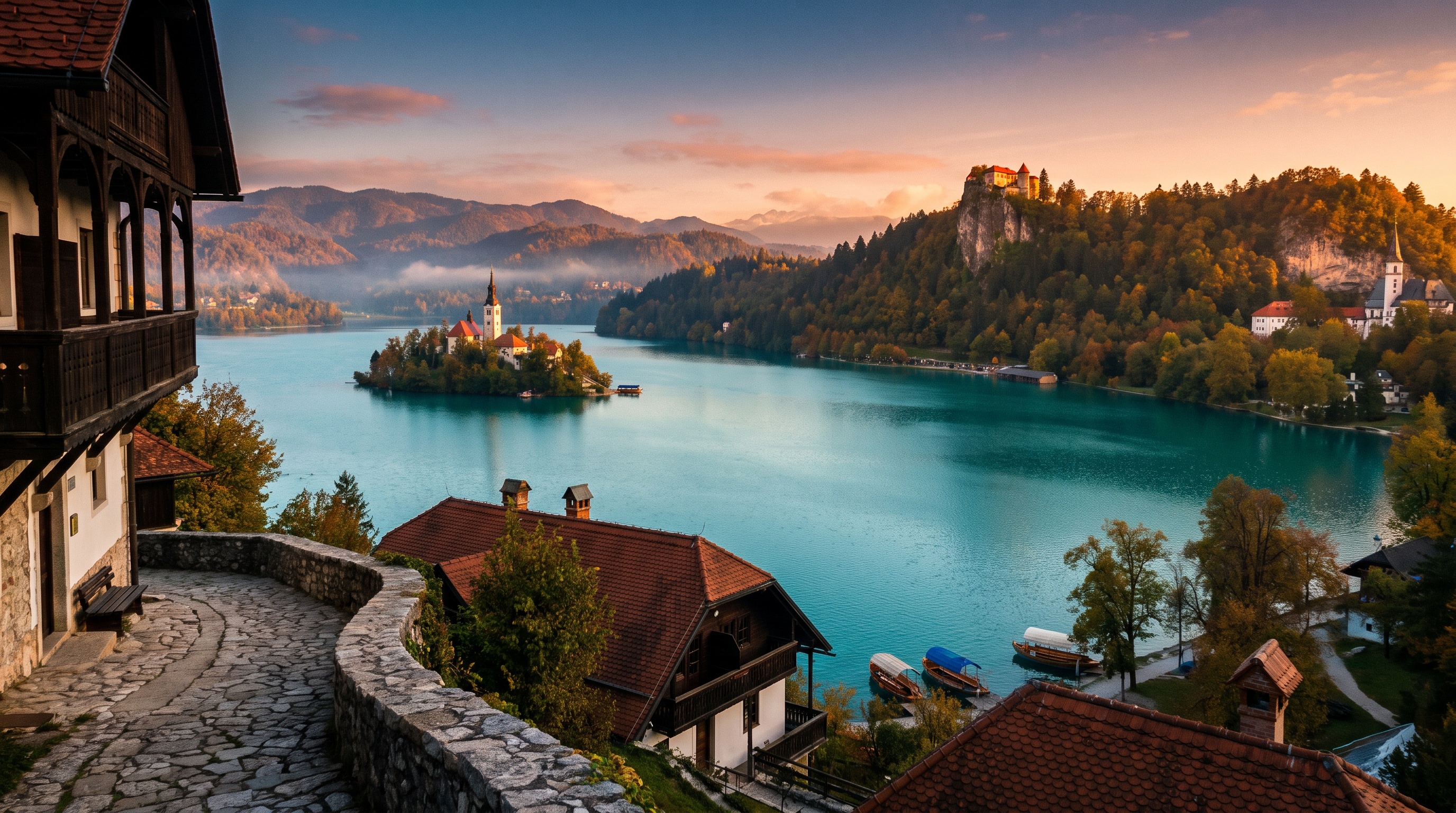
Do Indians Need a Visa for Slovenia? (2026 Quick Answer)
Yes. Indian passport holders must obtain a Schengen Type C visa before travelling to Slovenia. There is no visa-free entry, no visa on arrival, and no e-visa option available for Indian citizens. Applications must be submitted in person at an authorised visa application centre in India, where biometric data is collected as part of the process.
Slovenia has been a full Schengen Area member since 2007. That means a visa issued for Slovenia also permits travel to other Schengen countries within the permitted stay period. This makes Slovenia a practical entry point for Indians planning a broader European itinerary.
According to visa service providers (commercial platforms, not government bodies, despite their own labelling), Indian citizens cannot get a Slovenia visa on arrival or through an online e-visa portal. They must apply in advance with biometrics at a visa application centre. Confirm entry requirements with the official VFS Global website or the Slovenian embassy before booking travel.
Slovenia Visa Types for Indians
A Slovenia visa for Indian nationals can be issued in four broad categories depending on the purpose of travel:
- Tourist visa: for leisure travel, sightseeing, or visiting friends and family in Slovenia
- Business visa: for meetings, conferences, trade fairs, or professional engagements
- Private visa: for personal visits or family-related purposes not classified as tourism
- Work visa: for employment-related travel, which typically requires additional documentation from a Slovenian employer
Most Indian travellers apply under the tourist or business category. The category chosen must accurately reflect the true purpose of the visit. A business traveller who applies as a tourist without the required invitation letters, for example, risks having the application refused. The reason is a category mismatch.
Diplomatic passport holders and immediate family members of EU nationals are handled under separate categories with different documentation requirements from regular applicants.
Slovenia Visa Cost and Fees for Indians (2026)
The Schengen consular fee for a Slovenia visa is EUR 90 for adults over 12 years of age and EUR 45 for children aged 6 to 12. Children under 6 are generally exempt. These fees are set at the EU level and are collected by the embassy or consulate handling the application.
VFS Global also charges a service fee of INR 2,711, inclusive of 9% SGST and 9% CGST, for processing the application at its centres in India. This is a separate charge, payable regardless of the visa outcome.
Applicants at VFS centres in Mumbai, Chennai, Kolkata, Bangalore, and Hyderabad who need documents couriered to the processing hub in New Delhi may face an additional charge. As of 2024, this courier fee was INR 800 for a two-way transfer. Confirm the current figure with VFS Global before applying, since charges are subject to change.
Schengen visa fees are typically non-refundable regardless of whether the visa is granted or refused. This is standard Schengen practice. But the source here is commercial guidance rather than an official government statement, so verify the refund policy with VFS Global at the time of application.
The exact INR equivalent of the EUR 90 consular fee depends on the exchange rate applied at the time of payment. The official VFS Global India website or the Slovenian embassy will carry the current conversion figure.
Required Documents Checklist
All supporting documents must be translated into English or Slovenian and presented in the prescribed order specified by VFS Global. The following are needed for a standard Slovenia Schengen tourist visa application:
- Valid passport: typically valid for at least 3 months beyond the intended return date, with at least 2 blank visa pages. The passport should generally have been issued within the last 10 years, though this detail is not explicitly corroborated by an official Slovenian or VFS source; confirm this requirement directly before applying.
- Completed visa application form: accurately filled and signed
- Passport-size photographs: two recent photographs, 35mm x 45mm, on a plain white background, taken within the last 6 months
- Travel insurance: mandatory coverage of at least EUR 30,000 valid across all Schengen countries for the entire duration of the trip
- Flight itinerary: confirmed onward and return flight bookings
- Accommodation confirmations: covering all nights of the intended stay
- Bank statements: from the last 3 months, demonstrating sufficient funds
- Proof of employment or business: an employer's leave approval letter, salary slips, business registration documents, or equivalent evidence of professional ties to India
- Invitation letter: required when visiting a friend or family member in Slovenia; this letter must be signed by the inviting person and certified and registered at the relevant administrative unit in Slovenia
On funds: general Schengen guidance, not officially confirmed by a Slovenian government source for India-specific applications, cites roughly EUR 70 per day for adults as a working benchmark. Minors are reduced to EUR 35 per day. As of August 2026, this translates to approximately INR 90,000 to INR 1,30,000 for a 10 to 12 day trip, though the precise INR figure varies with the exchange rate at the time of application.
Income Tax Returns appear in some third-party guides but are not explicitly listed as a required document on official Slovenian embassy or VFS Global resources. Applicants should verify the exact current checklist with VFS Global or the embassy before the appointment.
How to Apply for a Slovenia Visa from India (Step-by-Step)
Applications are handled through VFS Global, the authorised visa application centre network for Slovenia in India. The process works as follows:
- Step 1: Determine the correct application centre based on residential jurisdiction. Reportedly, per third-party guides, the New Delhi embassy covers northern and eastern states while the Mumbai consulate covers western and central states. Confirm the exact jurisdiction with the embassy or VFS Global before applying, as this allocation may not be fully current in all sources.
- Step 2: Book an appointment at the relevant VFS Global centre. Centres operate in Delhi, Mumbai, Chennai, Kolkata, Bangalore, and Hyderabad, among other cities. An appointment is mandatory.
- Step 3: Prepare all required documents as per the official VFS checklist, translated into English or Slovenian where applicable.
- Step 4: Attend the appointment. A Slovenia visa appointment at a VFS centre typically lasts 15 to 20 minutes, covering document verification, biometric data collection for applicants over 12, fee payment, and application submission, though appointment length can vary by centre and the complexity of the case. An acknowledgement receipt with a tracking number is issued at the end.
- Step 5: Pay the consular fee and VFS service fee at the centre at the time of submission.
- Step 6: Track the application using the reference number and await the decision from the consulate.
According to some visa guides, applications should be submitted no earlier than 3 months before the intended travel date. Confirm the exact application window with the embassy or VFS Global, as Schengen rules can allow earlier submission in some circumstances.
As general guidance, book your appointment and submit documents at least 4 to 6 weeks before travel during peak seasons. Actual lead times vary by season and centre.
Slovenia Visa Processing Time
Processing time for a Slovenia Schengen visa from India is typically around 15 calendar days from the date of submission at the visa application centre. This is an estimate only; actual processing times vary and are not officially fixed by the Slovenian authorities for India specifically.
According to Visarun's own platform data, standard processing takes approximately 15 business days and can extend to 2 to 4 weeks during peak seasons. Applicants should verify current processing times directly with VFS Global or the Slovenian embassy, as these figures are not independently confirmed and can change.
Different sources use calendar days and working days interchangeably for the same 15-day benchmark. Planning conservatively, with extra buffer time, is sensible. Applying at least 3 to 4 weeks before the intended travel date is a reasonable general guideline.
Visa Validity and Length of Stay
A Slovenia Schengen Type C visa is issued for short stays not exceeding 90 days. The visa may be single-entry or multiple-entry depending on the purpose of travel, the applicant's travel history, and the assessment of the consular officer. Approval decisions belong to the consulate, not to any third-party visa assistance service.
A multiple-entry Schengen visa allows entry to Slovenia and other Schengen countries on multiple occasions, but the 90-day limit within any rolling 180-day period applies to all non-EU nationals including Indian citizens. This is the Schengen 90/180-day rule.
Holding a multi-entry Schengen visa valid for several years does not entitle a traveller to stay beyond 90 days in any 180-day window. The visa governs how many times and over what period entry is permitted. The actual number of days spent in the Schengen Area is tracked separately, under the 90/180-day rule. The European Commission provides a short-stay calculator on its website, so travellers can check their remaining permitted days before each trip.
Common Rejection Reasons and How to Avoid Them
According to Atlys, citing European Commission statistics for 2024, over 1.65 lakh Schengen visa applications from India were refused that year. That's roughly 1 in every 7 applications submitted. Knowing the common reasons for refusal helps applicants put together a stronger submission.
- Unclear travel purpose or itinerary: an incomplete or inconsistent travel plan raises doubts about the reason for the visit. A detailed day-by-day itinerary supported by confirmed bookings addresses this.
- Insufficient proof of funds: bank statements that do not show a stable and adequate balance for the duration of the trip are a frequent issue. Statements should be up to date and clearly reflect the funds available.
- Inconsistent documents: discrepancies between the application form, passport, flight bookings, and financial records create doubt. Every document in the set should align with the others.
- Applying through the wrong Schengen country: when visiting multiple Schengen destinations, the application should go to the consulate of the country where the most time will be spent. If Slovenia is the sole destination, the application correctly goes to the Slovenian mission.
- Doubts about intention to return to India: consular officers consider whether the applicant is likely to return after the visit. Strong ties to India through employment, family, property, or business help demonstrate this.
- Inadequate travel insurance: policies that do not meet the EUR 30,000 minimum Schengen coverage requirement, or that contain technical errors, are among the most common causes of outright rejection. Many Indian travel insurance products do not meet Schengen standards, so reading the policy terms carefully before purchase is important.
- Wrong visa category: choosing a tourist visa for a business trip without the appropriate invitation letters, or vice versa, can lead to rejection on the grounds of a category mismatch.
Recent Changes (2025-2026 Updates)
EU Entry/Exit System (EES) — Now Operational
The EU's Entry/Exit System began its progressive rollout on 12 October 2025 and reached full implementation on 10 April 2026. EES replaces the previous system of manually stamping passports at Schengen borders with an automated digital registration process.
At Schengen border crossings including those in Slovenia, an Indian traveller's name, travel document data, biometric fingerprints, facial images, and the date and place of entry and exit are now registered electronically. This makes it straightforward for border authorities to calculate remaining permitted days automatically. Travellers who have used days in other Schengen countries should track their 90-day allowance carefully.
The EU has also launched an optional Travel to Europe mobile app. It lets non-EU nationals pre-register their passport data and facial images up to 72 hours before reaching an EES border crossing point, which may help speed up the physical border process.
ETIAS — Delayed, No Confirmed Date
The EU's planned travel authorisation system, ETIAS, is not in force as of mid-2026 and has no confirmed launch date. No launch date is set. As of July 2026, according to etias.com (an unofficial monitoring site, not the EU itself), ETIAS no longer has a fixed launch date after the originally planned 2026 timeline slipped. A Financial Times report indicated the system may not go live until 2027. The EU has stated it will announce a start date several months before the system goes live.
Indian nationals travelling to Slovenia in 2026 require only their Schengen Type C visa. When ETIAS does eventually launch, travellers holding a valid Schengen visa will be exempt from the ETIAS requirement for the duration of that visa.
There are no Slovenia-specific visa rule changes for 2026 beyond these EU-wide developments. Check the official Slovenian embassy website and VFS Global India for the latest information before submitting an application.
FAQ
Can Indians get a Slovenia visa on arrival?
No. Indian passport holders cannot obtain a visa on arrival at any Schengen border point including Slovenia. According to visa service providers (commercial platforms, not government bodies), a Schengen Type C visa must be obtained in advance from an authorised visa application centre in India before departure.
How much does a Slovenia visa cost for Indians in 2026?
The Schengen consular fee is EUR 90 for adults over 12 years and EUR 45 for children aged 6 to 12. VFS Global adds a service fee of INR 2,711 inclusive of taxes. Applicants outside Delhi may also incur a courier fee. As of 2024 this was INR 800 for a two-way transfer, though the current figure should be confirmed with VFS Global before applying.
How long does Slovenia visa processing take for Indians?
Processing time is typically around 15 calendar or working days from the date of submission. Different sources use both terms for the same benchmark figure. According to Visarun's own platform data, processing can extend to 2 to 4 weeks during peak periods. Verify the current timeline with VFS Global or the Slovenian embassy before planning travel, as processing times are not officially fixed.
How many days can an Indian stay in Slovenia on a Schengen visa?
A Schengen Type C visa permits a maximum stay of 90 days within any rolling 180-day period across the entire Schengen Area. This rule applies to all Indian nationals regardless of the number of entries made or the total validity of the visa.
Is travel insurance mandatory for a Slovenia visa application?
Yes. Travel insurance is mandatory for all Schengen visa applications including Slovenia. The policy must provide a minimum coverage of EUR 30,000, be valid for the entire duration of the trip, and cover all Schengen member states. Policies that do not meet these criteria are a documented cause of visa rejection.
Which VFS centre in India handles Slovenia visa applications?
VFS Global operates Slovenia visa application centres in Delhi, Mumbai, Chennai, Kolkata, Bangalore, and Hyderabad. Reportedly, per third-party guides, the New Delhi embassy covers northern and eastern Indian states while the Mumbai consulate covers western and central states. Confirm the exact jurisdiction with the embassy or VFS Global before booking an appointment.
Does a Slovenia Schengen visa allow travel to other European countries?
Yes. A visa issued for Slovenia permits entry to all Schengen member countries, not only Slovenia. The 90-day limit within any 180-day period applies across the entire Schengen Area regardless of how many countries are visited during the trip.
How much money do I need to show for a Slovenia visa application?
As general Schengen guidance, not officially confirmed by a Slovenian government source for India-specific applications, roughly EUR 70 per day for adults is often cited as a working figure, with EUR 35 per day for minors. As of August 2026, applicants planning a 10 to 12 day trip should be prepared to show an approximate bank balance of INR 90,000 to INR 1,30,000. The exact figure depends on the exchange rate at the time of application.
How does the EU Entry/Exit System affect Indian travellers entering Slovenia?
As of 10 April 2026, EES is fully operational at Schengen borders including Slovenia. Indian travellers' biometric and travel document data are now registered electronically at entry and exit rather than via a passport stamp. This means remaining permitted days under the 90/180-day rule are tracked automatically. Travellers should monitor their own day count across the Schengen Area. No prior registration is required from the traveller, though the EU's optional Travel to Europe app allows pre-registration up to 72 hours before arrival.
Do Indians need ETIAS to visit Slovenia in 2026?
No. ETIAS has not launched as of mid-2026 and no confirmed start date exists. Reports suggest the system may not go live until 2027. Indian nationals travelling to Slovenia in 2026 need only a valid Schengen Type C visa. Once ETIAS does launch, travellers holding a valid Schengen visa will be exempt from the ETIAS requirement for the duration of that visa.


